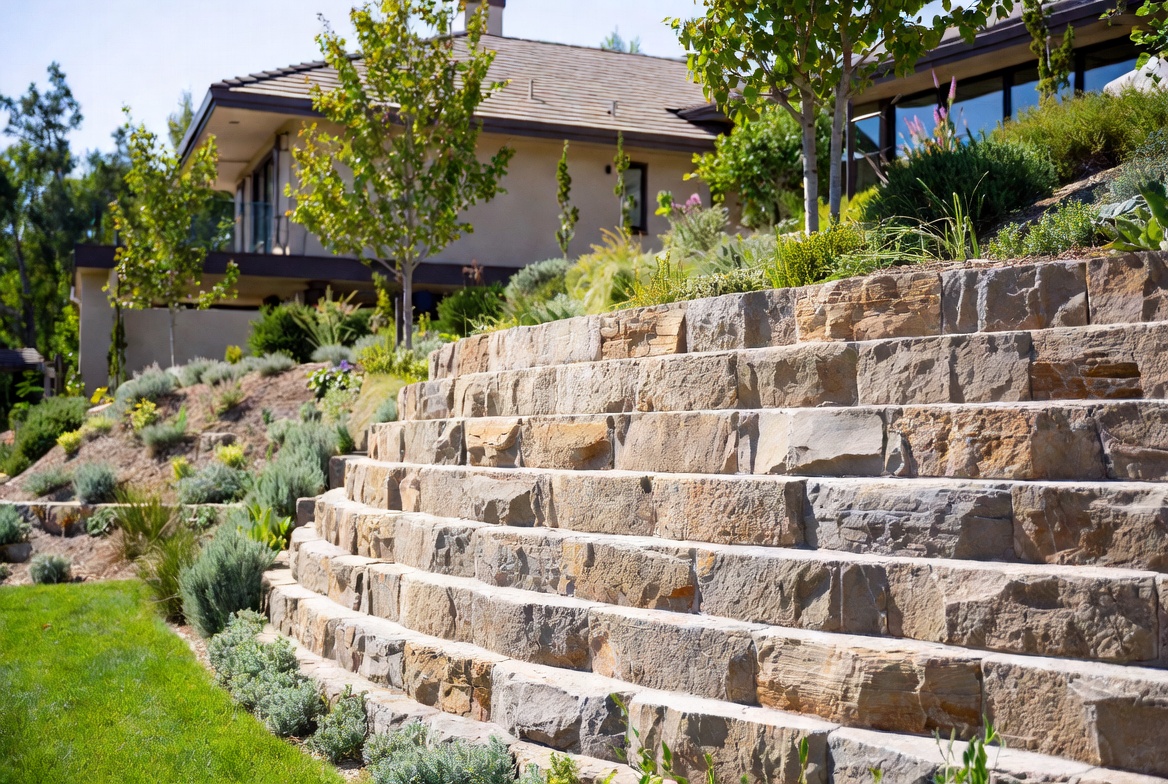
In regions like Seattle and King County, outdoor spaces are shaped as much by nature as they are by design. Sloped terrain, consistent rainfall, and shifting soil conditions make landscaping a technical challenge rather than just a visual one. Among the most effective solutions for managing these challenges is the use of rock retaining walls—structures that quietly perform essential work while blending into the natural environment.
Why Sloped Landscapes Need Structural Support
Many residential properties in Western Washington are built on uneven or elevated ground. While this offers scenic advantages, it can create instability over time. Soil naturally shifts, especially when exposed to frequent rainfall, and without proper support, this movement can lead to erosion, drainage issues, and even structural concerns near foundations.
Retaining walls are designed to counteract this movement. By holding soil in place and redistributing pressure, they stabilize slopes and reduce the risk of land displacement. This is particularly important in areas where water saturation is common, as wet soil becomes significantly heavier and more prone to shifting.
The Natural Advantage of Rock-Based Walls
While retaining walls can be built using various materials, natural rock stands out for its durability and adaptability in wet climates. Unlike wood, which can rot, or some manufactured materials that may degrade over time, natural stone maintains its structural integrity even under constant exposure to moisture.
Basalt, a commonly used stone in the Pacific Northwest, is especially valued for its strength and resistance to environmental wear. Its dense composition allows it to withstand both heavy rainfall and temperature fluctuations without cracking or deteriorating.
In addition to performance, natural rock also offers a visual advantage. Its irregular shapes and earthy tones blend seamlessly into the surrounding landscape, making the wall feel like an extension of the terrain rather than an artificial addition.
Managing Water: The Hidden Function
One of the most critical aspects of any retaining wall is what happens behind it. Water buildup can create hydrostatic pressure, which is one of the leading causes of wall failure. Without proper drainage, even a well-built structure can weaken over time.
To address this, retaining wall systems often include integrated drainage solutions such as:
- Gravel backfill to allow water to flow freely
- Perforated pipes that redirect water away from the structure
- Weep holes that relieve pressure buildup
These elements work together to ensure that water doesn’t accumulate behind the wall, significantly increasing its lifespan and reliability.
Expanding Usable Outdoor Space
Beyond structural stability, retaining walls also unlock new possibilities for how outdoor spaces can be used. A steep or uneven yard can be transformed into multiple flat levels, each serving a different purpose.
For example:
- Upper terraces can be used for planting or gardening
- Mid-level areas can accommodate patios or seating zones
- Lower sections can serve as pathways or recreational spaces
This kind of transformation allows homeowners to make full use of their property, even in areas that were previously difficult to access or maintain.
Local Considerations That Matter
Building a retaining wall in Seattle isn’t the same as building one in a dry or flat region. Local regulations, soil types, and environmental factors all play a role in how these structures are designed and installed.
For instance, walls below a certain height may not require permits, but taller or more complex projects often involve engineering considerations. In some cases, collaboration with geotechnical experts is necessary to ensure the wall meets safety and compliance standards.
Additionally, access to the construction site can influence how the project is executed. Properties with limited space or restricted entry points may require more manual work, which can affect both time and planning.
Long-Term Performance Over Short-Term Appearance
While retaining walls often enhance the visual appeal of a property, their primary purpose is functional. A well-designed wall should last for decades, requiring minimal maintenance while continuing to support the landscape effectively.
This longevity depends on several factors:
- Proper site preparation and excavation
- Correct material selection
- Effective drainage integration
- Thoughtful design tailored to the specific terrain
When these elements are addressed from the beginning, the result is a structure that not only looks natural but also performs reliably through years of environmental stress.
A Structural Solution That Blends With Nature
In the Pacific Northwest, landscaping solutions must strike a balance between durability and environmental harmony. Rock retaining walls achieve this by working with the natural characteristics of the land rather than against them.
For those looking to better understand how these systems are designed and applied in real-world settings, exploring a professionally built Rock Retaining Wall can offer valuable insight into how structure and landscape come together to create stable, functional outdoor spaces.
Final Thoughts
A retaining wall is often one of the most important yet overlooked elements of a property’s landscape. It operates behind the scenes—holding soil, guiding water, and supporting usable space—while quietly shaping how the land is experienced.
In regions where terrain and weather are constantly interacting, investing in the right structural solutions can make the difference between a yard that struggles to hold up and one that remains stable, functional, and visually integrated for years to come.