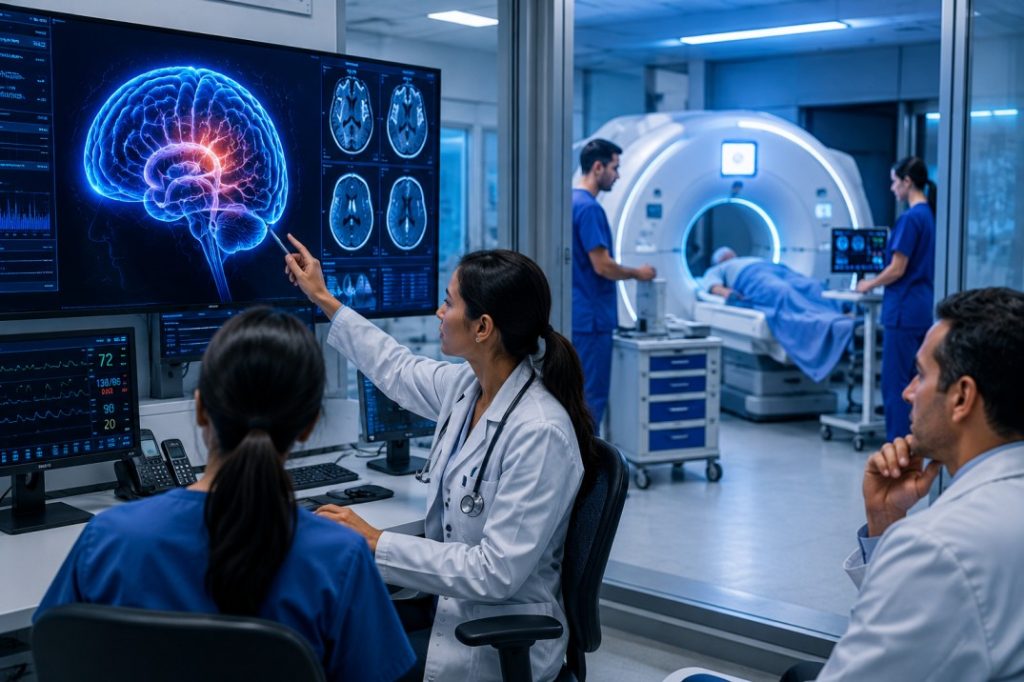
In today’s fast-paced healthcare environment, one of the most common complaints from physicians is the overwhelming amount of time spent on documentation. Between updating patient charts, entering notes into Electronic Health Records (EHRs), and meeting compliance requirements, doctors often spend more time typing than treating. The result? A growing epidemic of physician burnout.
This is where Scribe AI steps in—an intelligent, automated solution that takes the weight of documentation off the physician’s shoulders. But how exactly does it work, and how does it help reduce burnout and save valuable time?
Let’s explore.
What is Scribe AI?
Scribe AI is an artificial intelligence-based tool designed to automate clinical documentation. By using voice recognition, natural language processing (NLP), and machine learning, it listens to conversations between doctors and patients, understands the context, and generates accurate medical notes in real time.
Think of it as a virtual medical scribe, working silently in the background while physicians focus on their patients.
Related: What is Medical Scribe?
The Documentation Burden in Healthcare
Here are a few stats that highlight the issue:
-
???? Over 50% of a physician’s workday is spent on EHR documentation.
-
⏱️ Doctors often spend 2–3 hours per day after clinic hours catching up on notes—what’s known as “pajama time.”
-
???? Burnout rates among physicians have reached record highs, with documentation cited as a top contributor.
This is not just an inconvenience—it’s a crisis that impacts patient care, provider satisfaction, and overall healthcare quality.
How Scribe AI Saves Time
1. Real-Time Note Generation
Scribe AI listens to the doctor-patient interaction and transcribes relevant information into structured notes. No need for physicians to type or dictate separately.
2. Integration with EHR Systems
Most Scribe AI tools integrate directly with EHRs, allowing automatic data entry and reducing the time spent toggling between systems.
3. Reduces Double Documentation
With AI capturing everything live, there’s no need to write notes after hours or re-enter data into different formats.
4. Supports Voice Commands
Some tools allow doctors to give commands to update charts, pull up patient history, or even order tests—hands-free.
How Scribe AI Helps Reduce Burnout
✅ More Patient Time, Less Admin Work
Doctors get to focus on patients, not paperwork, which improves job satisfaction and patient outcomes.
✅ Improved Work-Life Balance
Less after-hours work means more time for rest, family, and recovery, directly combating burnout.
✅ Decreased Cognitive Load
Eliminating the need to memorize everything during the visit frees up mental bandwidth.
✅ Customizable and Adaptive
AI scribes learn a physician’s style over time, making notes more intuitive and reducing the need for constant corrections.
Real-World Impact: Case Studies & Stats
-
???? A large internal medicine clinic reported saving 2 hours per doctor per day after implementing Scribe AI.
-
???? Clinics using AI documentation tools have experienced up to 70% reduction in after-hours charting.
-
???? Surveys show that over 80% of physicians using Scribe AI report higher job satisfaction.
Top Scribe AI Tools That Help Save Time
| Tool | Key Features |
|---|---|
| DeepScribe | Ambient listening, EHR-ready notes |
| Suki AI | Voice-activated, adaptive note templates |
| Augmedix | Combines AI with human oversight |
| Nuance DAX | Deep integration with Epic/Cerner |
| Abridge | Summarizes and shares notes with patients |
Challenges to Keep in Mind
While the benefits are compelling, Scribe AI still faces some limitations:
-
????️ Accuracy in complex cases or noisy environments
-
???? Contextual misunderstandings (AI lacks human nuance)
-
????️ Setup and training time for optimal use
-
???? Patient privacy and HIPAA compliance must be ensured
The Future: Smarter, Seamless Scribing
As AI models become more advanced, future versions of Scribe AI may offer:
-
Predictive charting and coding
-
Clinical decision support
-
Multilingual transcription
-
Fully autonomous chart management
This evolution means less stress and more time doing what doctors are trained to do: heal.
Conclusion
Physician burnout is real, but it doesn’t have to be inevitable. By leveraging the power of Scribe AI, healthcare providers can reclaim their time, reduce mental fatigue, and focus on what truly matters: delivering excellent patient care.
Whether you’re a solo practitioner, part of a busy clinic, or a hospital administrator, investing in Scribe AI is an investment in efficiency, well-being, and the future of healthcare.
???? Looking to implement Scribe AI in your practice or curious which tool is best for you? Drop your questions below or reach out for a comparison guide!