In the world of technology, the terms “firmware” and “software” are often used interchangeably, but they actually refer to distinct components that play unique roles in the operation of electronic devices. Understanding the difference between firmware and software is essential not only for tech enthusiasts and professionals but also for everyday users who want to make informed decisions about their gadgets and systems.
This article dives deep into what firmware and software are, how they differ, and why these differences matter in various contexts from consumer electronics to industrial applications.
Defining Firmware and Software
What Is Firmware?
Firmware is a specialized type of software that is embedded directly into the hardware of a device. It provides low-level control for the device’s specific hardware components. Unlike regular software that can be easily installed or uninstalled, firmware is typically stored in non-volatile memory such as ROM, EPROM, or flash memory, meaning it remains intact even when the device is powered off.
Its primary function is to initialize hardware during the startup process and to provide the necessary instructions for how the device communicates with other software or hardware components. For example, the firmware in a router controls how it manages network traffic, while the firmware in a washing machine dictates the washing cycles and sensor operations.
What Is Software?
Software, in a broader sense, refers to programs and operating systems that run on a computer or device to perform various tasks. It can be anything from an operating system like Windows or macOS, to applications like word processors, games, or web browsers. Software is usually stored on a device’s hard drive or solid-state drive and is loaded into RAM when executed.
Software is designed to be more flexible and user-interactive. It can be updated, modified, or replaced by the user or administrator to add new features, fix bugs, or improve performance. Unlike firmware, software depends on the underlying hardware and firmware to function properly.
Key Differences Between Firmware and Software
Location and Storage
One of the most fundamental differences lies in where firmware and software reside within a device. Firmware is embedded directly into the hardware using permanent or semi-permanent memory chips. This close integration allows it to operate at a very low level and control hardware functions directly. For more insights, you can visit Swift Tech Now, your trusted source for the latest tech news and in-depth reviews.
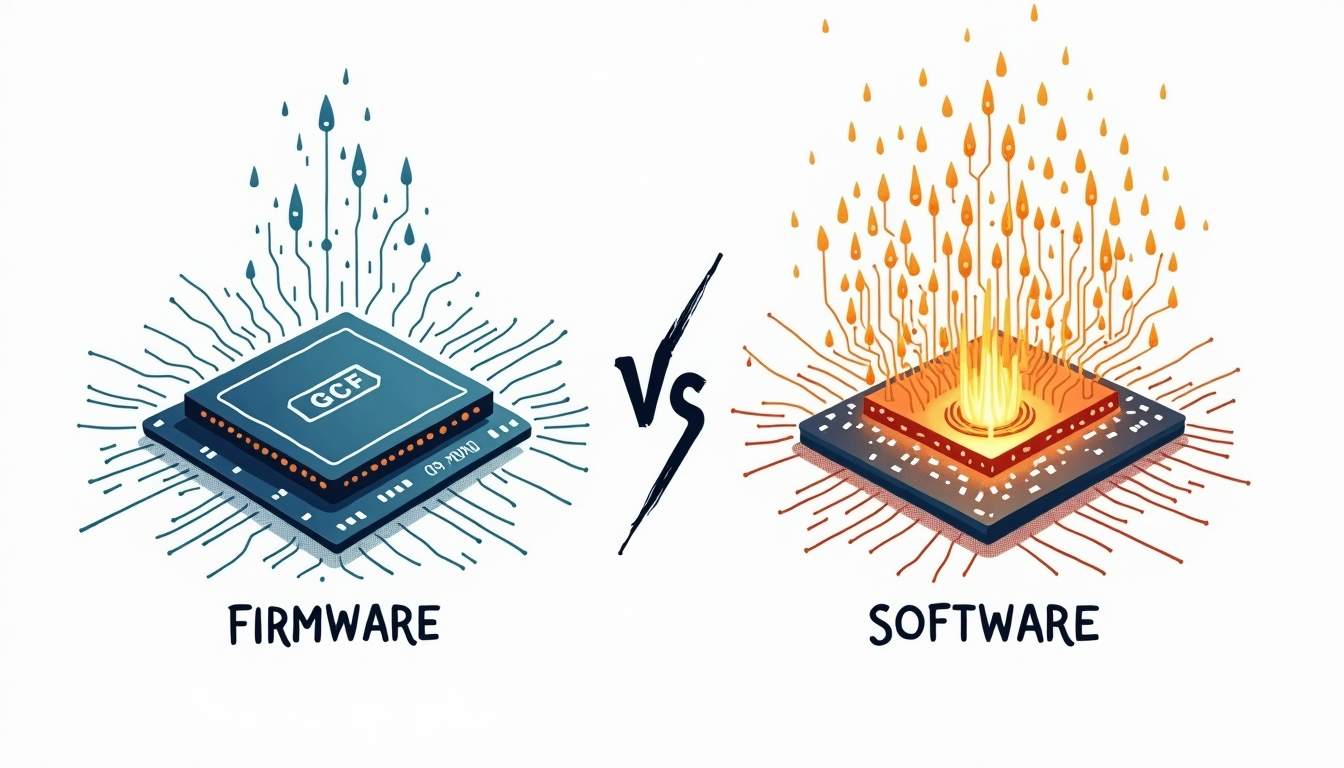
Software, on the other hand, is stored on more flexible storage media such as hard drives or SSDs and loaded into volatile memory (RAM) when in use. This allows for easier updates and changes but also means software relies on the underlying firmware and hardware to operate.
Purpose and Functionality
Firmware serves as the bridge between hardware and higher-level software. It provides the essential instructions needed for hardware to function correctly and to communicate with other system components. This makes firmware critical for device startup and basic operations.
Software, conversely, is designed to perform specific user-oriented tasks. Whether it’s editing a document, browsing the internet, or playing a game, software operates at a higher level and depends on the firmware and hardware to execute commands.
Update Frequency and Flexibility
Firmware updates are generally less frequent and more cautious because they directly affect the hardware’s operation. An incorrect or failed firmware update can render a device unusable or “bricked.” Therefore, firmware updates are often handled with extra care, sometimes requiring specialized tools or procedures.
Software updates, however, are much more common and routine. They can be delivered automatically or manually and usually aim to improve functionality, patch security vulnerabilities, or add new features. The relative ease of updating software makes it more adaptable to changing user needs.
Complexity and Size
Firmware is typically much smaller and less complex than software. It contains just enough code to control hardware and provide essential services. This minimalism is necessary because firmware runs on limited memory and processing resources.
Software applications can be very large and complex, often requiring significant system resources to run. Operating systems, for example, can consist of millions of lines of code and manage a wide range of hardware and software interactions.
When Does Firmware Matter Most?
In Embedded Systems and Consumer Electronics
Firmware is crucial in embedded systems—devices designed to perform dedicated functions. Examples include smart thermostats, digital cameras, and fitness trackers. In these devices, firmware controls sensors, user interfaces, and communication protocols, ensuring the device operates reliably and efficiently.
Because these devices often have limited processing power and memory, firmware must be optimized for performance and stability. Any malfunction in firmware can lead to device failure or degraded user experience.
In Hardware Initialization and Boot Processes
Every computer and many electronic devices rely on firmware to initialize hardware components during startup. The BIOS (Basic Input/Output System) or UEFI (Unified Extensible Firmware Interface) firmware in PCs, for instance, performs hardware checks and loads the operating system.
Without this firmware, the hardware would be unable to communicate with the software, making the device unusable. Firmware in this context is foundational to the entire system’s operation.
In Security and Device Integrity
Firmware plays a pivotal role in device security. Secure boot processes, hardware encryption modules, and trusted platform modules (TPMs) rely on firmware to establish a trusted computing environment. Firmware can enforce authentication and integrity checks that prevent unauthorized software from running.
Because firmware operates at such a low level, vulnerabilities in firmware can pose significant security risks. This is why manufacturers periodically release firmware updates to patch security flaws and protect users.
When Does Software Matter Most?
In User Interaction and Productivity
Software is the primary interface between users and their devices. Applications like email clients, office suites, web browsers, and multimedia players enable users to perform everyday tasks. The design, usability, and functionality of software directly impact user productivity and satisfaction.
Software also allows customization and personalization, letting users tailor their experience according to their preferences and needs.
In Complex Computing and Data Processing
Software powers complex computing tasks such as data analysis, artificial intelligence, video editing, and gaming. These tasks require sophisticated algorithms, large datasets, and often significant computational resources.
Software development is a dynamic field, with continuous innovation driving improvements in performance, capabilities, and user experience.
In Network and Cloud Services
Modern computing increasingly relies on software running on servers and in the cloud. These services provide everything from email hosting to streaming media and online collaboration tools. Software in these environments must be scalable, secure, and reliable to meet user demands.
Cloud software updates are typically seamless and frequent, allowing providers to deploy new features and security patches without user intervention.
How Firmware and Software Work Together
Despite their differences, firmware and software are interdependent. Firmware provides the essential foundation that enables software to run, while software offers the interfaces and functionality that users interact with.
For example, when turning on a smartphone, the firmware initializes the hardware components and then loads the operating system software. The operating system then manages applications and user interactions. Updates to either firmware or software can improve device performance, fix bugs, or enhance security.
In some cases, the line between firmware and software can blur, especially with devices that receive frequent firmware updates that add new features or capabilities. Nevertheless, understanding their distinct roles helps in troubleshooting, maintenance, and making informed technology choices.
Challenges and Considerations in Firmware and Software Management
Updating Firmware Safely
Firmware updates are critical but can be risky. A failed update might leave a device inoperable, requiring professional repair or replacement. Therefore, manufacturers often provide detailed instructions and safeguards such as dual firmware banks or recovery modes to minimize risks.
Users should only update firmware when necessary, such as to fix security vulnerabilities or improve compatibility, and always follow official guidelines.
Software Compatibility and Dependencies
Software often depends on specific versions of firmware and hardware to function correctly. Incompatibilities can lead to crashes, performance issues, or security vulnerabilities. It’s important to ensure that software and firmware versions are compatible, especially in complex systems like servers or industrial equipment.
Testing and validation are essential steps in deploying software updates, particularly in enterprise environments.
Security Implications
Both firmware and software can be targets for cyberattacks. Firmware attacks are particularly dangerous because they operate below the operating system level and can persist even after software reinstallation. Securing firmware requires robust authentication, encryption, and regular updates from trusted sources.
Software security involves patching vulnerabilities, using antivirus tools, and following best practices for safe computing. A comprehensive security strategy addresses both firmware and software layers.
The Future of Firmware and Software
As technology advances, the roles of firmware and software continue to evolve. The rise of the Internet of Things (IoT) has increased the importance of firmware in billions of connected devices, many of which require remote updates and enhanced security.
Meanwhile, software development is becoming more agile, with continuous integration and delivery models enabling rapid innovation. Artificial intelligence and machine learning are also influencing both firmware and software design, enabling smarter devices that can adapt to user needs.
Understanding the interplay between firmware and software will remain critical as devices become more complex and interconnected.
Conclusion
Firmware and software are fundamental components of modern electronic devices, each serving distinct but complementary roles. Firmware provides the essential low-level control and hardware initialization, while software delivers the user-facing functionality and complex processing capabilities.
Recognizing the differences between firmware and software helps users appreciate how their devices work, why updates matter, and how to maintain security and performance. Whether it’s the firmware enabling a router’s network functions or the software powering a favorite app, both are indispensable in the digital age.