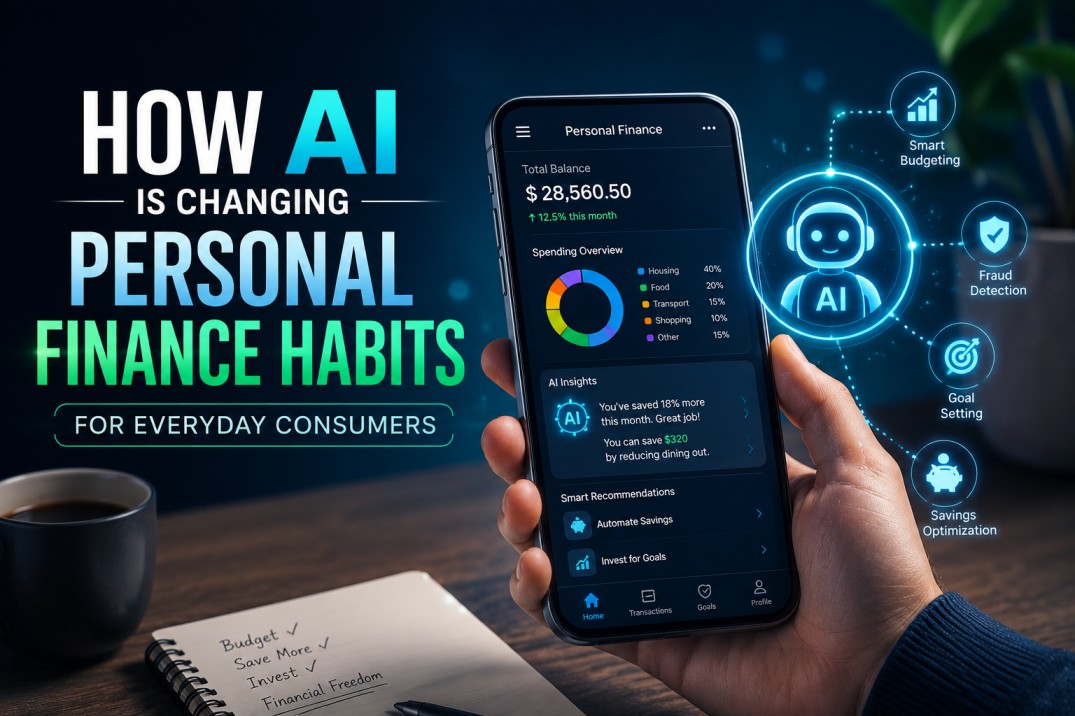
Managing personal finances used to require significant time and effort. People often relied on spreadsheets, manual budgeting methods, and financial advisors to stay on top of their money. Today, artificial intelligence (AI) is changing the way everyday consumers manage their finances by providing smarter, faster, and more personalized solutions.
From tracking expenses to automating savings and improving financial decision-making, AI is becoming an essential part of modern personal finance. As technology continues to evolve, consumers are finding it easier than ever to achieve their financial goals with the help of intelligent tools and applications.
The Growing Role of AI in Personal Finance
Artificial intelligence has become a driving force behind many financial technologies used today. Banks, fintech companies, investment platforms, and budgeting applications leverage AI to analyze large amounts of financial data and provide valuable insights to users.
Rather than manually reviewing transactions and spending patterns, consumers can now rely on AI-powered systems that automatically organize and interpret financial information. This allows users to make better financial decisions while saving time and reducing stress.
Smarter Budgeting and Expense Management
One of the most significant benefits of AI in personal finance is automated budgeting. AI-powered financial apps can categorize expenses, identify spending habits, and generate detailed reports that help consumers understand where their money is going.
For example, if an individual frequently exceeds their monthly entertainment budget, the AI system can detect the pattern and recommend adjustments. These insights enable users to develop healthier spending habits and maintain greater control over their finances.
Additionally, AI can provide real-time alerts when spending exceeds predefined limits, helping consumers avoid unnecessary expenses and stay within budget.
Personalized Financial Guidance
Traditional financial advice often applies general recommendations to a broad audience. AI changes this approach by delivering highly personalized financial insights based on individual behaviors and financial circumstances.
By analyzing income, expenses, savings goals, and debt levels, AI-powered tools can recommend customized strategies for improving financial health. These recommendations may include:
- Creating realistic savings goals
- Reducing unnecessary expenses
- Optimizing debt repayment plans
- Improving credit management
- Identifying investment opportunities
This personalized approach helps consumers make decisions that align with their unique financial situations.
Improving Financial Literacy
Financial literacy remains a challenge for many people. AI-powered virtual assistants and chatbots are helping bridge this knowledge gap by providing instant answers to financial questions.
Consumers can quickly learn about budgeting, saving, investing, credit scores, and loan options without needing extensive financial expertise. These tools make financial education more accessible and empower users to make informed decisions.
Those interested in learning more about the growing influence of personal finance can explore how advanced technologies are transforming the way individuals manage money and plan for the future.
Enhanced Security and Fraud Detection
Security is one of the most important aspects of personal finance. AI plays a critical role in protecting consumers by identifying suspicious transactions and detecting potential fraud.
Unlike traditional security systems that rely on fixed rules, AI continuously learns from transaction data and user behavior. This allows it to identify unusual activity more accurately and respond to potential threats more quickly.
As online banking and digital payments become increasingly common, AI-driven fraud detection systems help consumers enjoy greater peace of mind when managing their finances.
Automated Savings Strategies
Many people struggle to save money consistently. AI-powered savings tools simplify the process by automatically identifying opportunities to save.
These applications analyze spending habits and transfer small amounts of money into savings accounts when users can comfortably afford it. Over time, these automated contributions can accumulate into substantial savings without requiring significant lifestyle changes.
By reducing the need for constant financial decision-making, AI encourages long-term saving habits and helps consumers build stronger financial foundations.
Making Investing More Accessible
Investing can seem intimidating, especially for beginners. AI-powered robo-advisors are making investing more accessible by offering automated portfolio management and personalized investment recommendations.
These platforms assess factors such as risk tolerance, financial goals, and investment timelines to create customized investment strategies. They can also automatically rebalance portfolios as market conditions change.
This technology allows everyday consumers to access sophisticated investment management services that were once available primarily to wealthy investors.
Transforming Lending and Credit Decisions
AI is also reshaping the lending industry. Traditional lending decisions often rely heavily on credit scores and limited financial data. AI can evaluate a broader range of factors, providing a more comprehensive assessment of a borrower’s financial situation.
This enables lenders to make faster and more accurate decisions while helping qualified borrowers gain access to appropriate financial products. Consumers benefit from streamlined application processes and more personalized lending options.
The Future of AI in Personal Finance
The influence of AI on personal finance is expected to grow significantly in the coming years. Future innovations may include predictive financial planning, advanced wealth management tools, and increasingly personalized financial recommendations.
As these technologies continue to develop, consumers will have access to more powerful resources that simplify money management and improve financial decision-making.
Conclusion
Artificial intelligence is fundamentally changing the way everyday consumers manage their finances. Through smarter budgeting, personalized guidance, enhanced security, automated savings, and accessible investing solutions, AI is helping people make better financial decisions and achieve their financial goals more effectively.
As adoption continues to increase, AI will likely become an even more valuable tool for individuals seeking greater financial stability, confidence, and long-term success.