
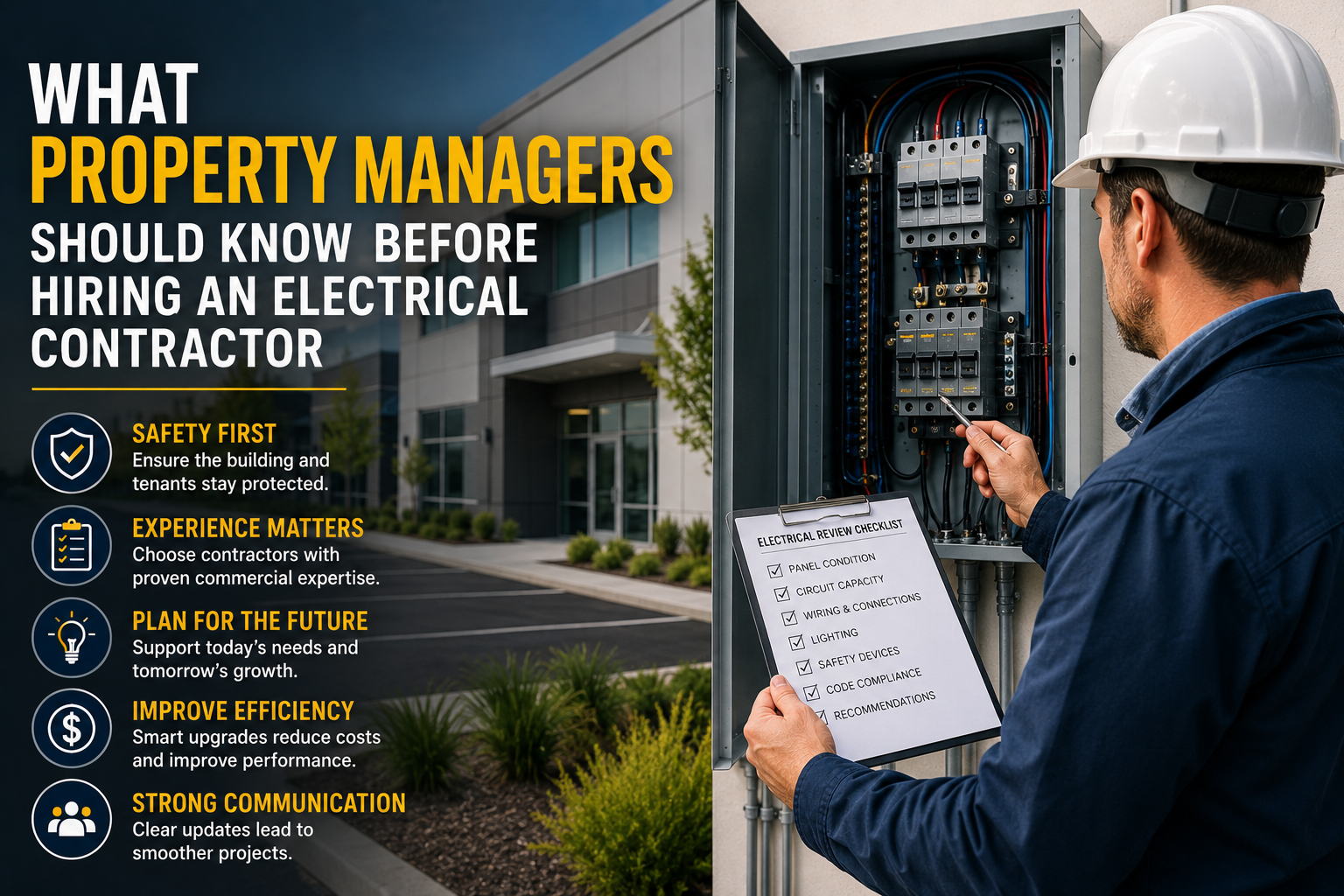
Managing a commercial property means staying ahead of problems that can affect safety, tenant satisfaction, and business continuity. Electrical systems are especially important because they support lighting, security, HVAC equipment, technology, signage, and daily operations. Choosing the right contractor can make maintenance, upgrades, and emergency planning much easier.
Electrical Work Is a Long-Term Property Investment
Electrical repairs are sometimes treated as one-time fixes, but the best results come from long-term planning. A property’s electrical system should support current use while allowing room for future tenant needs, equipment upgrades, and building improvements.
For example, an office building may need more dedicated circuits as tenants add workstations and conference technology. A retail center may need exterior lighting improvements, sign connections, or EV charging infrastructure. A warehouse may need upgraded power distribution for machinery or storage systems.
Thinking ahead helps prevent repeated service calls and reduces the chance of expensive emergency repairs.
When Property Managers Should Schedule an Electrical Review
An electrical review is useful before problems become urgent. It can also help owners prioritize repairs and budget more accurately.
Consider scheduling a review when:
- A new tenant is moving in
- A space is being remodeled
- Breakers trip frequently
- Lighting is outdated or inconsistent
- Panels are old or at capacity
- EV chargers or backup generators are being considered
- A building has recurring maintenance complaints
- Insurance, inspection, or code concerns arise
A professional review can identify whether the issue is isolated or part of a larger system limitation.
Tenant Improvements Require Careful Coordination
Tenant improvement projects often involve tight timelines. Electrical work may need to align with framing, HVAC, flooring, inspections, and final occupancy requirements. Delays in one area can affect the entire schedule.
That is why many property managers prefer working with experienced electrical contractors near Santa Clara County who understand commercial spaces, permitting, lighting layouts, panel upgrades, dedicated circuits, and power distribution needs.
The right contractor should be able to communicate clearly with owners, tenants, general contractors, and inspectors. That coordination helps reduce confusion and keeps the project moving.
Safety Should Guide Every Decision
Electrical systems affect everyone in a building. Poor wiring, overloaded circuits, damaged panels, and improper installations can create serious risks. Property managers should never rely on temporary fixes, unlicensed work, or repeated patch repairs when a deeper issue may exist.
Safety-focused electrical maintenance may include:
Panel and Breaker Checks
Panels should be properly labeled, accessible, and sized for the building’s needs.
Lighting Maintenance
Interior, exterior, parking lot, stairwell, and emergency lighting should be reliable and appropriate for the space.
Wiring Inspections
Aging or damaged wiring should be evaluated before it causes outages or hazards.
Load Calculations
Before adding major equipment, the system should be reviewed to confirm it can handle the additional demand.
Energy Efficiency Can Improve the Property Experience
Electrical upgrades are not only about safety. They can also improve how a property feels and functions. LED lighting, smart controls, motion sensors, and improved exterior lighting can make buildings more comfortable, professional, and secure.
Energy-efficient upgrades may also reduce maintenance demands because modern fixtures often last longer than older systems. For property managers responsible for multiple buildings, fewer lighting failures and service interruptions can make a noticeable difference.
Emergency Preparedness Matters
Power issues rarely happen at convenient times. Outages, storm damage, panel failures, and equipment problems can interrupt tenants and create urgent service needs. Commercial properties should have a plan for responding quickly and safely.
A practical emergency plan should include:
- Updated electrical panel directories
- Access instructions for electrical rooms
- A list of critical systems that need priority support
- Backup power considerations for essential operations
- Clear tenant communication procedures
- A trusted contractor contact for urgent repairs
The better the preparation, the easier it is to respond calmly when something goes wrong.
How to Evaluate a Contractor
Not every electrician is the right fit for commercial property work. Property managers should look for contractors who are organized, responsive, and familiar with business environments.
Useful questions to ask include:
- Do they have commercial project experience?
- Are they licensed and insured?
- Can they support maintenance, repairs, and upgrades?
- Do they provide clear written scopes?
- Can they coordinate with tenants or other trades?
- Do they understand local code and permit requirements?
- Are they comfortable working around business operations?
A good contractor should explain options clearly without making the process feel more complicated than necessary.
Conclusion
Electrical systems play a major role in property performance, tenant satisfaction, and long-term building value. By planning upgrades, maintaining lighting, reviewing capacity, and choosing qualified contractors, property managers can reduce surprises and keep commercial spaces operating smoothly.
The best electrical decisions are proactive, practical, and focused on supporting the property’s future needs.