
Spray foam insulation improves building efficiency by sealing gaps, controlling air movement, and stabilizing indoor temperatures. By creating a continuous barrier, spray foam minimizes hidden air leaks that drive energy loss. When installed by a professional spray foam insulation company, property owners experience greater comfort, lower utility costs, and improved long-term performance by stopping drafts and heat transfer at the source.
Quick answers that matter most
- Spray foam forms an air barrier that reduces heating and cooling losses
- Better air sealing lowers energy use and HVAC workload
- Consistent insulation performance maintains comfort and durability
Why Air Sealing Matters For Efficiency
Air leaks are one of the main causes of energy waste in buildings. Older construction and poorly sealed assemblies allow conditioned air to escape and unconditioned air to enter. These uncontrolled air paths force heating and cooling systems to run more often and for longer cycles.
Research published by the U.S. Department of Energy shows that sealing gaps and cracks in a building envelope significantly reduces energy loss and improves comfort. Spray foam insulation acts as both an insulator and an air sealant, closing infiltration points that traditional materials leave open.

How Air Infiltration Increases Energy Use
- Warm air escapes through gaps in walls and attic transitions, increasing heating demand
- Hot outdoor air enters in warm months, making cooling systems run harder
- Moist air movement can lead to condensation and reduced insulation performance
Spray foam seals these gaps continuously, limiting air movement and cutting energy waste.
How Spray Foam Enhances Thermal Performance
Spray foam insulation reduces heat transfer better than many traditional materials. Its ability to expand and fill uneven spaces means it creates a tight fit even in irregular cavities.
According to industry research on spray foam benefits, closing gaps and air leaks can account for as much as 40% of energy savings compared to conventional insulation that does not seal air movement.
Two Foam Types And How They Perform
|
Foam Type |
Air Sealing |
Thermal Performance |
Best Application |
|---|---|---|---|
|
Open cell spray foam |
Excellent |
Good |
Walls, rooflines |
|
Closed cell spray foam |
Very high |
Higher per inch |
Foundations, high-moisture zones |
|
Fiberglass batts |
Low |
Moderate |
Dry interior areas |
|
Blown-in insulation |
Moderate |
Moderate |
Attics with prior air sealing |
Closed cell foam, in particular, adds structural support and acts as a vapor barrier, limiting heat transfer and moisture movement in addition to air sealing.
Improving HVAC Efficiency With Spray Foam
Heating and cooling systems work hardest when air leaks undermine insulation. Every draft forces the HVAC system to jump in and correct temperature differences.
Spray foam’s tight seal reduces that workload. The ENERGY STAR program notes that combining insulation with air sealing delivers stronger energy savings than insulation alone, reducing HVAC runtime and energy costs over time.
Real World Outcomes For HVAC Systems
- Reduced runtime during peak heating and cooling periods
- Smaller temperature swings across living or working spaces
- Longer system life due to less cycling
These outcomes mean less wear on equipment and lower maintenance expenses.
Moisture Control And Durability Benefits
Air leakage also carries moisture into walls, ceilings, and floors. Moisture weakens insulation performance, can lead to mold growth, and accelerates material degradation.
Spray foam’s air barrier also limits moisture movement, helping maintain insulation effectiveness longer and protecting structural components from humidity-related damage. Closed cell spray foam further resists water penetration, adding another layer of protection.
Bonus Tips
- Pair spray foam with proper ventilation to balance indoor air quality
- Prioritize sealing rim joists and attic transitions to cut major leakage paths
- Inspect crawlspaces for moisture sources before insulation work
How Spray Foam Fits In Energy-Smart Building Plans
Modern building codes and green building programs emphasize whole-building performance over R-value alone. Efficiency gains come from integrating insulation, air sealing, and moisture control in a coordinated strategy.
Spray foam supports these goals by forming a continuous envelope that limits air and heat movement. In retrofit and new construction alike, spray foam helps buildings meet higher performance standards with fewer gaps and less seasonal loss.
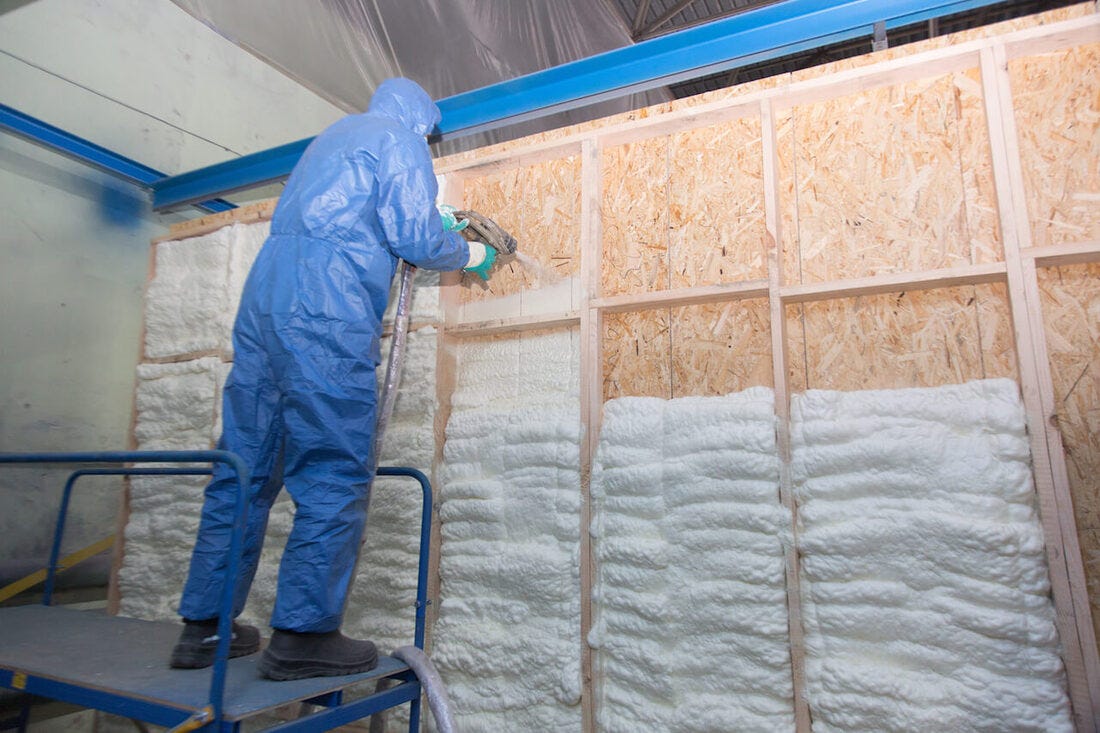
Case Studies
Projects that upgrade from traditional insulation to spray foam typically show:
- Lower monthly utility bills
- Fewer indoor temperature inconsistencies
- Higher occupant satisfaction with comfort levels
These outcomes demonstrate how a focus on sealing and insulation together advances overall building efficiency.
Answering Reader Questions About Efficiency And Spray Foam
Can spray foam reduce energy bills?
Yes. By sealing air leaks and improving thermal resistance, spray foam reduces HVAC workload and lowers heating/cooling costs.
Does spray foam help in humid climates?
Yes. Especially closed cell spray foam resists moisture migration, which supports consistent performance in humid areas.
Is spray foam better than fiberglass for efficiency?
Spray foam seals air gaps while fiberglass mainly slows heat transfer, so spray foam typically delivers greater overall efficiency.
Will spray foam help uneven heating or cooling?
Yes. The air barrier reduces drafts and hot/cold spots, leading to steadier indoor temperatures.
Does spray foam affect indoor air quality?
By limiting air infiltration, spray foam helps reduce outdoor pollutants and allergens from entering conditioned spaces.
Conclusion
Spray foam insulation improves efficiency by sealing air leaks, stabilizing indoor temperatures, and reducing HVAC strain. When installed with care, it creates a continuous barrier that cuts energy waste and supports better performance across seasons. Focusing on both insulation and air sealing together yields stronger results than relying on traditional insulation alone.
Get Better Building Efficiency With Peninsula Insulation
Spray foam reduces drafts, stabilizes temperatures, and protects against moisture and heat transfer. Peninsula Insulation supports energy-focused residential and commercial projects with precise spray foam applications designed to improve comfort and performance. To explore efficiency solutions, call (410) 770-2624 or email wil@mdsprayfoam.net.
FAQs
How much energy loss comes from air leaks in homes?
Air leaks can account for up to 40% of a home’s energy loss, making sealing a priority for efficiency.
Can spray foam improve comfort in older buildings?
Yes. Spray foam fills gaps that traditional insulation can’t reach, reducing drafts and temperature swings.
Does spray foam help humidity problems?
Closed cell foam acts as a vapor barrier, which helps limit moisture movement and supports indoor comfort.
Will spray foam increase HVAC lifespan?
By reducing HVAC runtime through better air sealing, spray foam can reduce wear on heating and cooling systems.
Is spray foam effective in commercial buildings too?
Yes. Commercial structures benefit from continuous air barriers that cut energy waste and improve interior conditions.
Author: Wil Perkins is the founder of Peninsula Insulation and a long-time resident of Easton, Maryland. With a hands-on approach and nearly five years in the insulation business, Wil leads a team known for professional service and quality work. He’s committed to providing the best Spray Foam Insulation solutions and lasting results for every project.
Reviewer: Emily Martinez has 12 years of experience in spray foam insulation. She reviewed this article and suggested ways to make the content more useful for contractors looking to grow their customer base.

