A New Chapter for Kenya’s Health Infrastructure
For decades, Kenya’s healthcare investment story has revolved around Nairobi. But today, the narrative is quietly shifting. Urban heartlands outside the capital—cities like Mombasa, Kisumu, Eldoret, and Meru—are fast becoming focal points of private sector health transformation. As these cities grow economically and demographically, the demand for reliable, advanced medical care has surged.
What’s driving this change isn’t just government reform or donor aid—it’s strategic, purpose-led private investment, exemplified by leaders like Jayesh Saini, whose initiatives are reshaping how healthcare is delivered in non-capital urban regions.
From Underserved to Emerging Hubs
Many of Kenya’s secondary cities have long struggled with fragmented, under-resourced health infrastructure. Referral hospitals were overcrowded, private options were limited, and basic diagnostics were often unavailable locally. Patients had to travel to Nairobi for procedures ranging from MRI scans to specialist surgeries, a journey that cost both time and money.
This reality began to change with targeted private sector entries, including multispecialty facilities launched by Lifecare Hospitals, Bliss Healthcare, and affiliated health ventures. These institutions brought a new model: accessible, high-quality care rooted in community engagement and supported by digital infrastructure.
Jayesh Saini’s healthcare ventures have been instrumental in this shift, prioritizing hospital expansion not as a luxury, but as a necessity for healthcare equity.
Case in Point: Expansion Beyond the Capital
Over the last five years, Lifecare Hospitals has established fully operational centers in cities like Bungoma, Migori, Eldoret, Meru, and Kikuyu. These are not scaled-down clinics—they are comprehensive, technology-equipped hospitals offering:
- Inpatient and outpatient care
- Surgical and emergency services
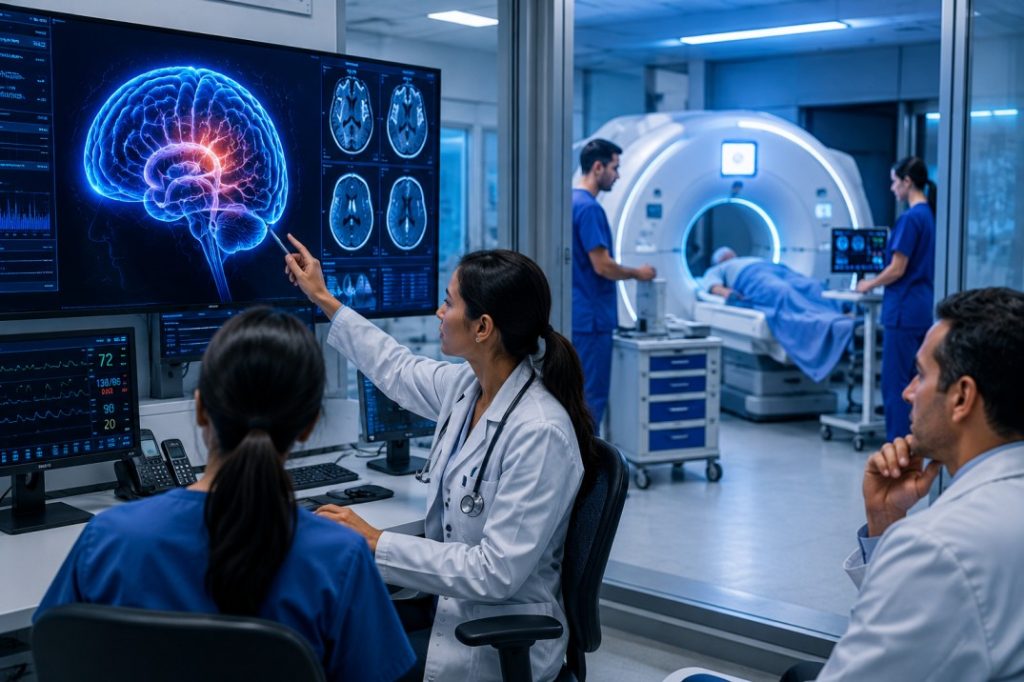
- Diagnostic imaging (MRI, CT scan, ultrasound)
- Critical care units (ICU, NICU, HDU)
- Specialized departments in pediatrics, gynecology, orthopedics, and more
This commitment to full-service capability in non-capital regions reflects Jayesh Saini’s broader vision: bring Nairobi-level care to cities where such services were previously inaccessible.
Meanwhile, Bliss Healthcare has complemented this strategy with a network of outpatient digital clinics in urban heartlands, ensuring early intervention, chronic disease monitoring, and specialist referrals—all within reach of middle-income populations.
Infrastructure with Intent: Not Just Buildings, But Ecosystems
What distinguishes these expansions is that they go beyond physical buildings. Private investment in Kenya’s healthcare today is also about building operational ecosystems.
In Eldoret, for example, the combination of advanced radiology services, digital patient records, and dedicated ambulatory units allows seamless coordination across departments. In Migori, telemedicine booths connect patients with Nairobi-based specialists, reducing delays and preventing unnecessary referrals.
These integrated systems have a common design principle: serve local communities without forcing them to relocate or wait. It’s a departure from traditional health models, which concentrated expertise in capital cities and assumed patients would follow.
According to internal assessments within similar private networks, patient satisfaction scores, appointment adherence, and clinical outcomes have all improved following local infrastructure upgrades. It’s a reminder that infrastructure, when paired with systems and intent, delivers not just access—but impact.
Strategic Technology Investments
In many of these urban heartlands, diagnostic gaps were as serious as doctor shortages. Investments by Saini-led institutions have prioritized technology as a frontline solution.
- MRI and CT scan facilities that previously required inter-county travel are now locally available in hospitals like Lifecare Meru and Eldoret.
- Digital triage systems and electronic medical records are streamlining patient flows and reducing errors.
- AI-assisted diagnostic software is being piloted to support primary care physicians in making early, accurate decisions.
These aren’t experimental showcases—they are functional tools deployed in high-traffic, high-need environments, transforming the quality of care for urban populations that had long been underserved.
Private Investment as a Public Good
A key feature of the healthcare expansion led by Jayesh Saini is its public-centered private strategy. Despite being privately funded, these hospitals often collaborate with local governments, faith-based institutions, and community groups. This allows for:
- Shared ambulance systems between public and private hospitals
- Health education campaigns hosted on hospital premises
- Outreach programs in partnership with county health departments
This model ensures that investment isn’t siloed—it becomes embedded in the broader public health landscape.
Additionally, pricing models across Bliss and Lifecare networks are designed to balance sustainability with accessibility, often offering services at rates significantly below Nairobi’s private hospitals. This affordability has helped build patient trust, especially among Kenya’s rising middle class.
The Road Ahead: Replication and Scaling
As demand rises in counties outside Nairobi, the private sector’s role in hospital expansion and health system strengthening will only grow. The success of Jayesh Saini’s health ventures provides a scalable template for how quality care can be deployed across the country:
- Build where the need is real, not just where returns are guaranteed.
- Invest in technology that reduces human strain without removing the human touch.
- Partner with local structures to ensure trust, uptake, and continuity.
With Kenya’s population projected to become increasingly urban yet decentralized, this approach is not just timely—it’s essential.
Conclusion: Building Where the Heartland Grows
Kenya’s healthcare future will not be built in boardrooms or announced in white papers. It will take shape in hospital wards in Meru, in maternal units in Migori, and in waiting rooms in Eldoret. These urban heartlands are not waiting to catch up—they are setting the pace.
Thanks to visionary leaders like Jayesh Saini, private investment is no longer about big brands in big cities—it’s about meaningful infrastructure in the places that need it most.
By grounding investment in purpose, designing for dignity, and executing with speed, Kenya’s private health sector is proving that true transformation happens not with noise—but with intention.