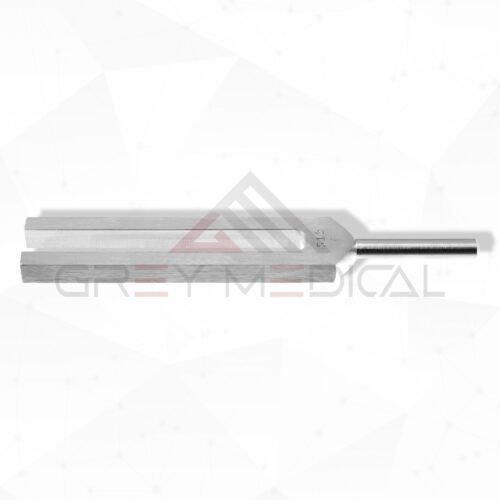
The tuning fork might bring to mind a musician tuning an instrument, but its role extends far beyond the concert hall and into the clinical setting. For centuries, these simple yet effective devices have been essential tools in medical diagnostics. At GreyMedical®, where we are dedicated to innovation and excellence in medical instruments, we appreciate the enduring value and precision of high-quality tuning forks medical professionals rely on every day. They serve as a fundamental, non-invasive method for a variety of assessments.
A Key Instrument in Neurological Exams
One of the primary uses for a tuning forks medical instrument is in neurology. Physicians use them to conduct quick and reliable tests for certain types of hearing loss and to assess a patient’s vibratory sense. When testing hearing, the Rinne and Weber tests are standard procedures. These tests help differentiate between conductive hearing loss (problems with the middle or outer ear) and sensorineural hearing loss (issues with the inner ear or auditory nerve).
By placing a vibrating tuning fork on different parts of the patient’s head, a practitioner can gather valuable diagnostic information without complex machinery. This initial screening is crucial for directing further investigation and treatment, showcasing the efficiency of this classic tool.
Assessing Peripheral Neuropathy
Beyond hearing, tuning forks medical applications are vital for detecting peripheral neuropathy, a condition involving nerve damage that often affects the hands and feet. This is particularly important for patients with diabetes, as neuropathy is a common complication. A clinician will strike the tuning fork and place it on a patient’s toe or finger to see if they can feel the vibration.
A diminished or absent sensation of vibration can be an early indicator of nerve damage. This allows for prompt intervention to manage the condition and prevent more serious complications. The simplicity and accuracy of this test make it an indispensable part of routine check-ups for at-risk patient populations. The reliability of these instruments underscores their importance in preventative care.
GreyMedical®: Precision in Every Instrument
The effectiveness of any diagnostic test depends on the quality of the tools used. Inferior instruments can produce unreliable results, potentially leading to misdiagnosis. That is why the precision engineering behind tuning forks medical grade surgery instruments is so critical. From the specific frequency they are calibrated to, such as 128 Hz for vibratory sense or 512 Hz for hearing tests, to the quality of the metal used, every detail matters.
Conclusion
The humble tuning fork remains a powerful and indispensable diagnostic tool in modern medicine. Its applications in neurology for testing hearing and vibratory sensation highlight its versatility and importance. GreyMedical® is proud to uphold a standard of excellence, ensuring that every instrument, including the essential tuning forks medical practitioners use, provides the accuracy and reliability needed for superior patient care.