Precision is a critical requirement in modern manufacturing, especially in machining operations where accuracy, repeatability, and stability directly impact product quality. As production demands increase and tolerances become tighter, manufacturers rely on advanced workholding solutions to achieve consistent results. Among these solutions, hydraulic workholding systems combined with hydraulic clamping devices have become essential tools for improving machining precision and operational efficiency.
These technologies provide controlled and uniform clamping force, ensuring that workpieces remain stable throughout the machining process. Their role is vital across industries such as automotive, aerospace, heavy engineering, and precision manufacturing.
Understanding Hydraulic Workholding
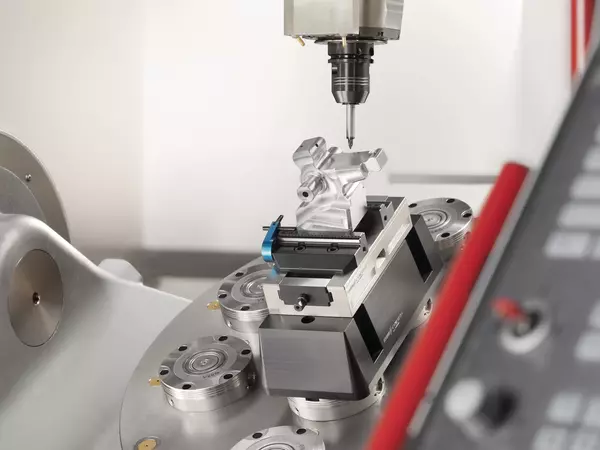
Hydraulic workholding refers to the use of pressurized hydraulic fluid to clamp, locate, and support workpieces during machining or assembly operations. Unlike manual or mechanical systems, hydraulic workholding offers precise control over clamping force, enabling consistent and repeatable performance.
This technology is widely used in CNC machining centers, transfer lines, and automated production cells. By applying even pressure across the workpiece, hydraulic workholding minimizes distortion and enhances machining accuracy.
What Are Hydraulic Clamping Devices?
Hydraulic clamping devices are components that convert hydraulic pressure into mechanical force to securely hold a workpiece. These devices include hydraulic clamps, cylinders, swing clamps, and fixture elements designed for various machining applications.
Their ability to deliver high clamping force in compact designs makes hydraulic clamping devices ideal for space-constrained setups and complex fixture configurations. They are commonly integrated into hydraulic workholding systems to provide reliable and consistent performance.
Why Precision Depends on Stable Workholding
In machining operations, even the slightest movement of a workpiece can lead to dimensional errors, poor surface finish, or tool damage. Traditional clamping methods may struggle to maintain stability under high cutting forces or varying load conditions.
Hydraulic workholding addresses this challenge by maintaining constant pressure throughout the machining cycle. When paired with hydraulic clamping devices, the system ensures that the workpiece remains firmly in place, improving overall precision and repeatability.
Uniform Clamping Force for Improved Accuracy
One of the key advantages of hydraulic workholding is its ability to apply a uniform clamping force. Unlike mechanical clamps that may apply uneven pressure, hydraulic systems distribute force evenly across the clamping points.
This uniformity reduces workpiece deformation, which is especially important when machining thin-walled or delicate components. Hydraulic clamping devices play a crucial role in delivering this controlled force, ensuring consistent machining results.
Enhancing Repeatability in CNC Machining
Repeatability is essential for high-volume production and quality control. Hydraulic workholding systems enable precise and repeatable positioning of workpieces, allowing manufacturers to maintain tight tolerances across multiple production runs.
By using reliable hydraulic clamping devices, operators can ensure that each workpiece is clamped in the same position with the same force every time. This consistency reduces scrap rates and improves overall production efficiency.
Read also: Pneumatic Clamping Solutions and the Role of a Pneumatic Gripper for Robotic Arm
Supporting High-Speed and Heavy-Duty Machining
Modern machining often involves high spindle speeds and aggressive cutting parameters. These conditions place significant stress on workholding systems. Hydraulic workholding is well-suited to handle such demands due to its high clamping force and stability.
Hydraulic clamping devices are designed to withstand heavy loads and maintain performance under extreme conditions. Their robustness ensures that workpieces remain secure, even during demanding machining operations.
Automation and Process Efficiency
Automation is a key driver of productivity in manufacturing. Hydraulic workholding systems integrate seamlessly with automated machining centers and robotic handling systems. Clamping and unclamping operations can be controlled electronically, reducing cycle times and manual intervention.
The use of hydraulic clamping devices enables fast and reliable clamping actions, supporting automated workflows and improving overall process efficiency.
Improved Safety and Operator Convenience
Safety is another important benefit of hydraulic workholding. Automated clamping reduces the need for manual handling, minimizing the risk of operator injury. Controlled pressure application also prevents over-clamping, which can damage workpieces or fixtures.
Hydraulic clamping devices enhance operator convenience by simplifying setup and reducing physical effort. This contributes to a safer and more ergonomic working environment.
Flexibility Across Applications
Hydraulic workholding systems are highly versatile and can be customized for a wide range of applications. From simple machining fixtures to complex multi-axis setups, hydraulic solutions adapt to various workpiece geometries and production requirements.
By selecting the right hydraulic clamping devices, manufacturers can design flexible fixtures that support multiple part variants without extensive reconfiguration.
Long-Term Reliability and Maintenance
Durability and reliability are critical for workholding systems operating in demanding environments. Hydraulic workholding systems are engineered for long service life, with components designed to withstand continuous operation.
Regular maintenance of hydraulic clamping devices, such as checking seals and fluid levels, ensures consistent performance and minimizes downtime. Their robust design contributes to lower maintenance costs over time.
The Role of Hydraulic Workholding in Smart Manufacturing
As Industry 4.0 advances, manufacturers are increasingly adopting smart and connected systems. Hydraulic workholding can be integrated with sensors and monitoring systems to provide real-time feedback on clamping force and system status.
Hydraulic clamping devices equipped with monitoring capabilities help ensure process reliability and enable predictive maintenance, supporting smarter and more efficient manufacturing operations.
Choosing the Right Hydraulic Workholding Solution
Selecting the appropriate hydraulic workholding system requires careful consideration of application requirements, including workpiece size, machining forces, and automation needs. Compatibility with machine tools and control systems is also essential.
Working with experienced solution providers ensures that hydraulic clamping devices are properly specified, installed, and optimized for precision and performance.
Conclusion
Precision machining depends on stable, reliable, and repeatable workholding solutions. Hydraulic workholding systems, supported by advanced hydraulic clamping devices, play a crucial role in improving accuracy, reducing deformation, and enhancing productivity. Their ability to deliver uniform clamping force, support automation, and withstand demanding machining conditions makes them indispensable in modern manufacturing.
For manufacturers seeking high-performance hydraulic workholding solutions, trusted industry leaders like Schunk offer innovative technologies that support precision, reliability, and long-term operational success.