
Leaving a beloved pet in the care of someone else can be stressful, but careful preparation makes the experience smooth for the sitter and comfortable for the animal. A well-prepared home saves time, reduces confusion, and helps the sitter follow routines and emergency procedures without scrambling. This guide covers everything from creating clear instructions to pet-proofing spaces, organizing supplies, and setting expectations for both short stays and extended trips.
Include a clearly labeled supplies checklist in the plan so sitters know where to find everything: food and treats, measuring cups, medication supplies (pill pockets, syringes, sharps container if applicable), leashes, harnesses, carriers, poop bags, grooming tools, bedding, and cleaning supplies for accidents. Note preferred brands and any off-limits substitutes (e.g., “no peanut butter with xylitol”). If there are household systems the sitter must operate alarm codes, thermostat settings, automatic feeders, or timed lighting give step-by-step instructions and note any troubleshooting tips. Consider adding a small map or photo of where key items are stored to save time and reduce stress during handoffs.
Finally, outline expectations for communication and record-keeping: how often the sitter should send updates (text, photo, or app), what information to include in each check-in (meals, bathroom breaks, mood, and any unusual symptoms), and where the sitter should log medication times. Provide guidance for behavior escalations signs that require immediate contact versus those that can be monitored and the preferred transport method and destination if veterinary care becomes necessary. Including a short note about compensation, parking instructions at the vet, and where to find house keys or garage codes can make the sitter’s job smoother and preserve the pet’s routine.
Also prepare a short, clearly written care sheet to leave with the supplies. Include daily feeding times, portion sizes, whether to offer treats during training, and any known food aversions or allergies. Add notes on water maintenance—how often to refresh bowls or how to refill automatic waterers—and where extra water is stored. For multi-pet homes, mark bowls and food containers with pet names or colored stickers to prevent mix-ups, and indicate any required feeding order or separation procedures to avoid scuffles.
Finally, provide basic cleanup and maintenance supplies near the feeding area: paper towels, a mild pet-safe disinfectant, extra garbage bags, and a small scoop for litter or waste. Leave simple instructions on when to discard uneaten wet food, how to sanitize bowls between meals, and what to do if the pet refuses to eat or shows signs of illness. A recent photo of each pet and contact numbers for you, your veterinarian, and an emergency clinic taped to the container makes it quick for the sitter to act confidently if something unexpected arises.
Label everything plainly: clearly marked food containers with portion sizes and feeding times, labelled medication with dosing instructions, and a visible emergency contact sheet including your veterinarian, a nearby emergency clinic, and a trusted neighbor or relative. Leave photocopies of vaccination records and microchip information, plus written instructions for what to do if the pet becomes lost (who to call, how to use the microchip service). Also point out where extra towels, a flashlight, and a basic pet first-aid kit are stored; knowing the location of hydrogen peroxide (for technician-guided induction of vomiting when advised), gauze, and a muzzle or soft wrap can save time in an emergency.
Don’t forget environmental safety details: set thermostats or provide space heaters/air conditioning guidance so the sitter can maintain a comfortable temperature, and note any surfaces that get hot in summer (black pavement, car seats). If your home has a pool, pond, or unfenced water feature, add clear instructions about supervision, use of life vests for dogs that swim, and how to secure pool covers. Finally, include behavioral notes—how the pet signals stress, calming cues or commands they respond to, and recommended quiet times to help the sitter prevent incidents before they happen and keep the animal calm and safe. You can also schedule a visit Four Dog Paws to ensure your sitter is well-prepared and familiar with your pet’s specific needs.
Provide detailed emergency and health information in a clearly marked section. List the primary veterinarian’s contact, 24-hour emergency clinics nearby, and any pet insurance or microchip numbers. Note signs of common issues to watch for—changes in appetite, vomiting, lethargy, excessive drinking, or unusual bathroom habits—and give step-by-step guidance on what to do if they occur (when to call you first, when to bring the pet to a clinic immediately). If the pet requires medication, include a dosing schedule, written instructions for administration, where medications are stored, and any known side effects to monitor. A photocopy of vaccination records and a short summary of recent health events can be invaluable for quick decisions.
Leave behavioural notes and enrichment ideas that will help the sitter keep the pet calm and happy. Describe favorite toys, games that tire the pet out, and cues that signal stress or overstimulation (for example: flattened ears, tail tucking, panting). Include guidance for walks—preferred routes, leash type, areas to avoid, how to handle encounters with other animals, and whether the pet is allowed off-leash in specific places. Also suggest simple record-keeping: a checklist or a short daily log of feeding times, bathroom breaks, walks, and medication given. This not only helps you stay informed while away but gives the sitter structure and confidence in caring for your home and pet effectively.
Include clear instructions about the pet’s daily routine and any behavioral quirks that might affect care. Note feeding amounts, portioning guidance for treats, preferred walking routes and leash needs, playtime preferences, and how the animal signals they need to go outside. If the pet takes medication, provide a written schedule with dosing instructions, storage location, and a spare set of instructions taped to the medication container. Point out any areas of the house that are off-limits for the pet and any surfaces or furniture that require special care after the pet uses them.
Outline home-security and key-handling procedures so the sitter knows how to lock up, operate alarm systems, and where spare keys are kept. Specify cleaning expectations for accidents, shedding, or excessive mud on paws, and where cleaning supplies, towels, and waste bags are stored. Finally, leave a short troubleshooting list of common minor issues (what to do if the pet refuses food, tips for calming them during thunderstorms, or where to find a favorite toy) so the sitter can act confidently without having to contact you for every small question.
Include clear behavioral cues and warning signs in the written instructions so sitters can spot issues early. Note body language that indicates stress or pain (for example, flattened ears, rapid breathing, hiding, loss of appetite, or sudden aggression) and list step-by-step actions the sitter should take if they observe these signs. Provide the veterinarian’s contact details, the nearest 24-hour emergency clinic, and a secondary contact who can make decisions if the owner is unreachable. Also specify any allergies, past medical history, and recent changes in behavior or diet that might be relevant during the sitter’s stay.
Finally, outline enrichment and daily rhythm to keep the pet engaged and comfortable. Describe preferred play styles, favorite treats and how often they’re allowed, and any calming rituals (soft music, dimmed lights, or puzzle feeders) that help regulate the pet’s mood. For animals on strict schedules, include a sample day-by-day timeline for feeding, exercise, cleaning, and quiet time so the sitter can maintain consistency and minimize disruption to the pet’s routine.
Final Walk-Through and Handover
On arrival, perform a quick walk-through with the sitter to demonstrate routines and point out the locations of supplies, the emergency contact list, garbage bins, and any quirks about locks or alarms. Leave a printed copy of the care plan in a visible spot and send a digital copy as well. If possible, do a short practice of any medication administration or specialized care steps so the sitter feels confident.
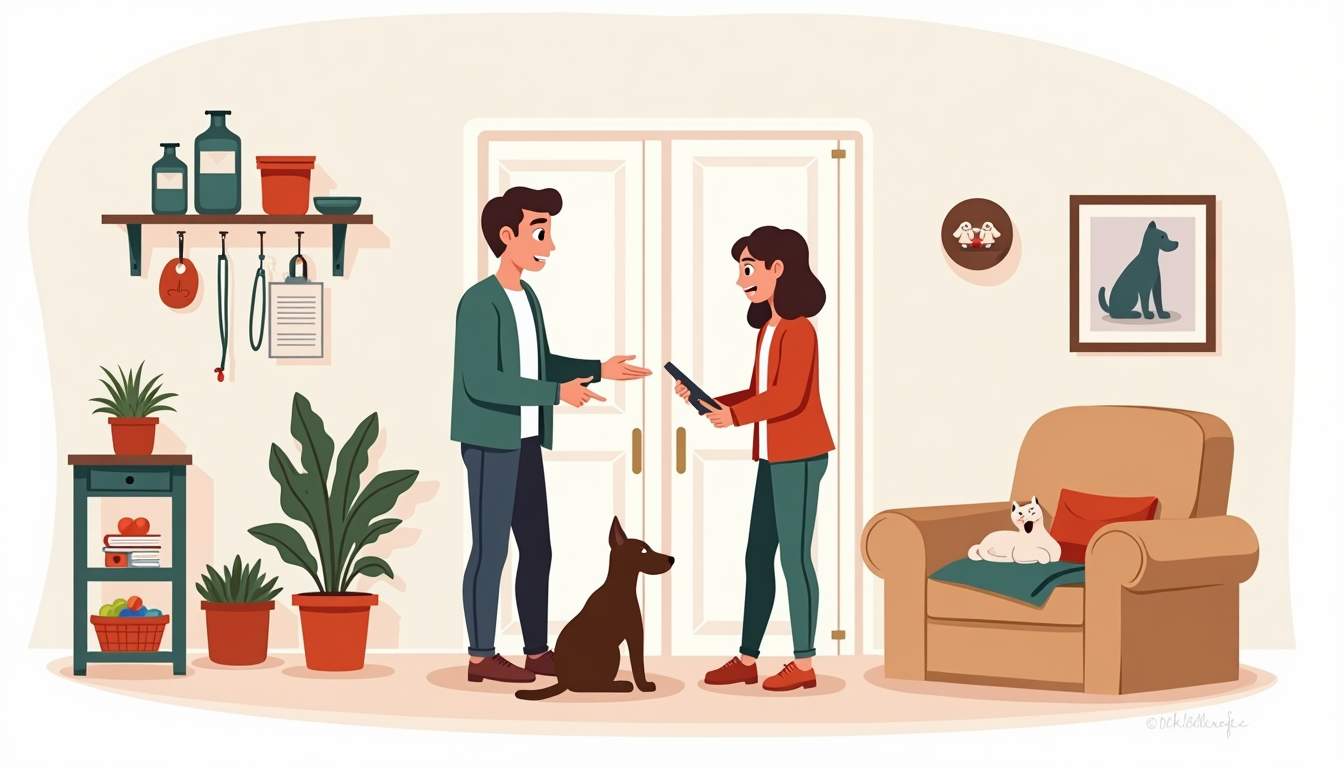
Go over the emergency escalation process in specific terms: which symptoms require immediate veterinary attention, which ones can wait until you return, and who to call first. Show the sitter where the pet carrier is stored and how to safely secure the animal for transport. Also point out the nearest 24-hour veterinary clinic and an alternate clinic in case the nearest is unavailable, and confirm the sitter knows how to access your pet’s medical records or vaccination certificates if needed.
Lock away valuables and sensitive documents, but avoid hiding things the pet or sitter might need in an emergency. Provide spare towels and cleaning supplies in case of accidents. Finally, thank the sitter and reassure them that help is available if needed. A calm, organized send-off sets the tone for successful care.
Return Preparations and Post-Trip Notes
On return, review the sitter’s notes and provide feedback. Discuss any unexpected issues, and note what worked well for future reference. Leave constructive comments for mutual improvement and offer a small token of appreciation. Clear communication after the stay strengthens the relationship and ensures even smoother arrangements next time.
Take a few minutes to restock or replace any supplies that were used—food, litter, medication supplies, or first-aid items—and update the written care plan with any small changes the sitter suggested. If the sitter encountered health or behavior concerns, schedule follow-ups with your veterinarian or trainer and let the sitter know the outcomes. Keeping an ongoing log of visits and adjustments makes future handovers quicker and helps build a reliable care routine for your pet.