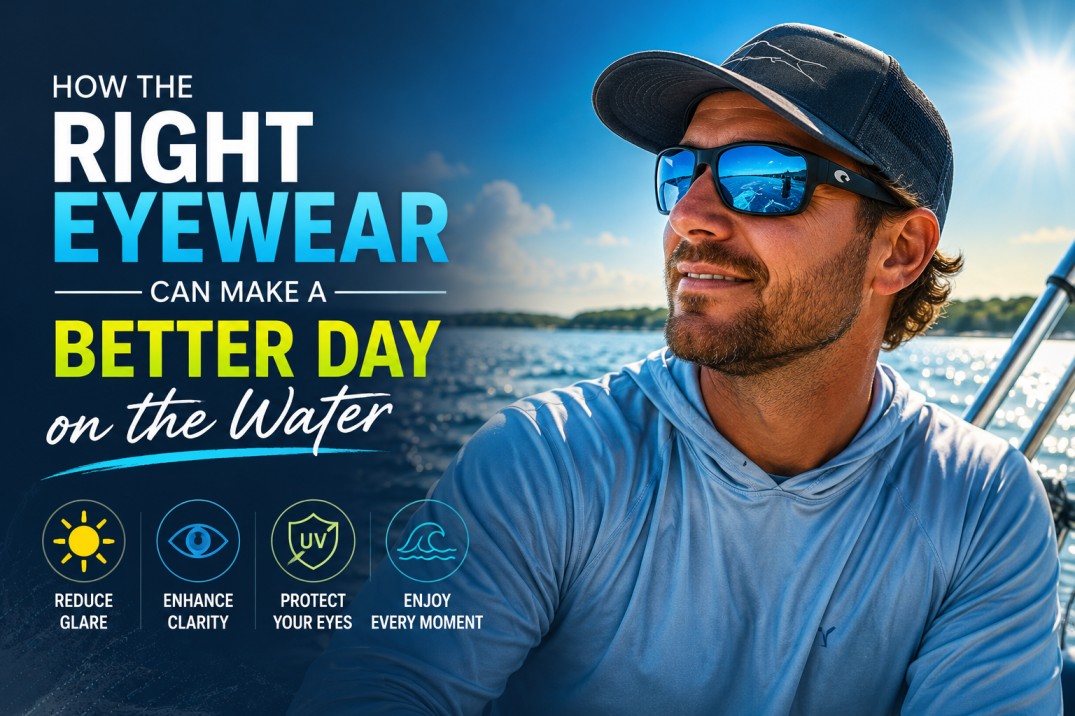
Fishing is often described as relaxing, but anyone who spends hours near open water knows it can be visually demanding. Sunlight reflects off the surface, shadows shift constantly, and small movements below the waterline can be easy to miss. The right gear does more than improve comfort; it can help anglers stay focused, read conditions more clearly, and enjoy longer days outdoors.
While rods, reels, line, and tackle usually get the most attention, eyewear deserves a place on every angler’s checklist. Choosing the right pair of sunglasses for fishing can make a noticeable difference in visibility, eye comfort, and overall performance on the water.
Why Fishing Creates Unique Visual Challenges
Water is one of the most reflective surfaces anglers encounter. On bright days, sunlight bounces off lakes, rivers, ponds, and coastal flats, creating intense glare. This glare does not just feel uncomfortable; it can make it harder to see structure, movement, and subtle changes in depth.
For anglers, visibility matters because small details often lead to better decisions. A shaded bank, a submerged log, a ripple near vegetation, or a flash beneath the surface can all indicate where fish may be holding.
Without proper eyewear, these details can be washed out by brightness and reflection.
Glare Reduction Helps You Read the Water
One of the biggest reasons anglers choose specialized sunglasses is glare control. Standard dark lenses reduce brightness, but they do not always remove the harsh reflected light coming off the water.
Fishing-focused eyewear is typically designed to improve clarity in reflective environments. This can help anglers see:
- Weed lines and grass beds
- Rocks, logs, and underwater structure
- Changes in water depth
- Fish movement near the surface
- Current breaks and shaded areas
Better visibility does not guarantee a catch, but it does help anglers make more informed choices throughout the day.
Lens Color Can Affect Performance
Not all fishing conditions are the same, which is why lens color matters. Different tints can improve contrast in different environments.
Gray Lenses
Gray lenses are a practical option for bright, open-water conditions. They reduce overall brightness while maintaining natural color balance. These are often useful for offshore fishing, boating, or long days under intense sun.
Amber or Copper Lenses
Amber and copper tones can increase contrast, making them helpful in freshwater environments, cloudy conditions, or areas with mixed light. Anglers fishing rivers, lakes, or shaded banks may appreciate the way these lenses help define underwater structure.
Green Mirror Lenses
Green mirror lenses can be versatile for both freshwater and inshore saltwater fishing. They often provide a balanced combination of glare reduction and contrast enhancement.
Choosing lens color should depend on where, when, and how you fish most often.
Comfort Matters During Long Sessions
Fishing often involves long stretches of waiting, walking, casting, paddling, or boating. If sunglasses pinch, slide, fog, or feel heavy, they become a distraction.
Comfort-focused features can include:
- Lightweight frame materials
- Secure nose pads
- Wraparound coverage
- Durable hinges
- Scratch-resistant lenses
- A fit that stays stable when looking down or casting
The best sunglasses are the ones you forget you are wearing. When eyewear feels natural, anglers are more likely to keep it on throughout the day, which improves both comfort and protection.
Eye Protection Is Part of Outdoor Preparedness
Fishing exposes the eyes to more than sunlight. Wind, spray, sand, hooks, branches, and insects can all create hazards. A dependable pair of sunglasses adds a practical layer of protection during everyday fishing situations.
UV protection is also important. Long hours outdoors increase exposure to ultraviolet rays, especially when sunlight reflects off water. Dark lenses alone are not enough; anglers should look for sunglasses that offer proper UV-blocking protection.
This is especially important for people who fish frequently, guide others, or spend full days on boats, docks, or riverbanks.
Matching Sunglasses to Your Fishing Style
Different anglers need different eyewear features. A kayak angler may prioritize lightweight frames and secure fit, while someone fishing offshore may prefer wider coverage and darker lenses.
Freshwater Fishing
For lakes, ponds, and rivers, contrast-enhancing lenses can help identify cover, vegetation, and fish movement in shallower areas.
Saltwater Fishing
Inshore and offshore anglers often deal with stronger sunlight and bigger reflective surfaces. Durable frames, high glare reduction, and full coverage become especially useful.
Fly Fishing
Fly anglers depend heavily on spotting currents, pockets, and fish behavior. Clear vision and side protection are especially valuable when moving through changing light.
Bank Fishing
For anglers walking shorelines or casting from docks, lightweight comfort and all-day wearability are key. The eyewear should handle both bright open areas and shaded spots.
Durability Should Not Be an Afterthought
Fishing gear gets dropped, splashed, packed, scratched, and exposed to heat. Sunglasses used on the water should be built to handle real outdoor conditions.
Look for practical durability features such as impact-resistant lenses, flexible frames, corrosion-resistant components, and coatings that help protect against scratches. A protective case or floating retainer can also help extend the life of your eyewear.
The goal is not just to buy sunglasses that look good on day one. The goal is to choose a pair that keeps performing after repeated trips.
Practical Tips for Taking Care of Fishing Sunglasses
Good eyewear lasts longer with basic maintenance. After fishing in saltwater, rinse sunglasses with fresh water to remove residue. Use a microfiber cloth instead of a shirt or towel, since rough fabric can scratch lenses.
Avoid leaving sunglasses on a hot dashboard for long periods, as heat can affect frames and coatings. Store them in a case when not in use, especially inside tackle bags or boat compartments.
Small habits can preserve lens clarity and keep the sunglasses comfortable for many seasons.
Conclusion
Fishing success depends on patience, preparation, and attention to detail. While eyewear may seem like a small part of the overall setup, it can have a big impact on comfort and visibility. The right sunglasses reduce glare, help protect the eyes, and make it easier to read water conditions throughout the day.
For anglers who want to spend more time focused on the cast instead of squinting through glare, quality fishing eyewear is a smart addition to any tackle system.