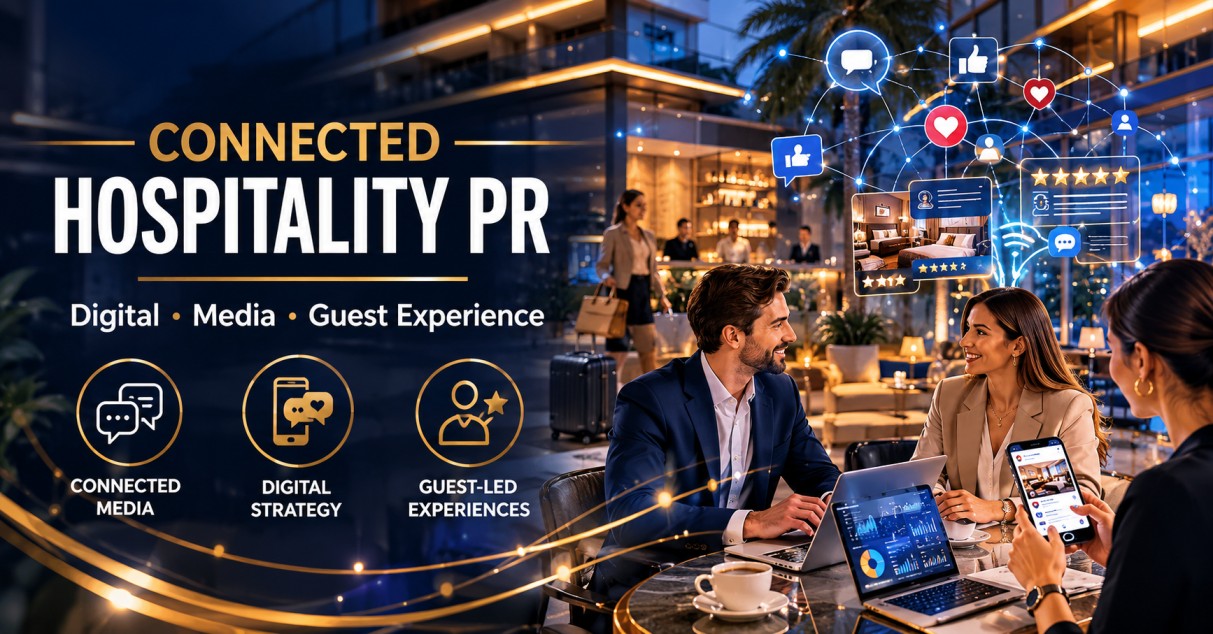
The hospitality communications landscape has undergone a significant transformation over the past decade. Public relations is no longer limited to press releases, media launches, or securing features in luxury travel publications. In 2026, hospitality PR functions within a highly interconnected environment where digital visibility, audience engagement, brand storytelling, and guest perception all influence commercial performance simultaneously.
Modern hospitality brands are expected to maintain consistency across every platform and interaction. From editorial coverage and social media presence to guest reviews and creator partnerships, each element contributes to how a hotel, resort, or hospitality group is perceived within an increasingly competitive market. As a result, integrated communication strategies have become essential for building credibility, maintaining relevance, and driving long-term brand value.
Hospitality Communications Have Become Fully Interconnected
Traditional hospitality PR once relied heavily on media placements to generate awareness. While editorial exposure still carries influence, today’s audiences engage with hospitality brands through multiple channels before making decisions. Search engines, travel platforms, short-form video, influencer recommendations, and user-generated content now shape consumer trust as much as conventional media coverage.
This shift has changed how hospitality PR campaigns are structured. Communications strategies are now designed to operate across interconnected channels rather than individual campaigns. A luxury hotel feature may begin with editorial exposure but is then amplified through digital storytelling, social engagement, creator content, and guest interaction online.
The result is a communications ecosystem where visibility is continuous rather than campaign-specific.
Media Relations Remain Important — But Expectations Have Changed
Media engagement continues to play an important role within hospitality PR, particularly in luxury travel, design, food, and lifestyle sectors. However, journalists and editors increasingly evaluate a hospitality brand’s wider digital presence before covering a story.
Social engagement levels, review sentiment, visual identity, audience perception, and online reputation all contribute to editorial credibility. This means PR professionals must now manage reputation holistically rather than focusing solely on traditional coverage opportunities.
Strong hospitality PR strategies therefore ensure consistency between press narratives, website messaging, digital campaigns, and real-world guest experiences.
Digital Visibility Now Influences Brand Authority
Search performance and digital discoverability have become central components of hospitality communications. Consumers increasingly research hotels, destinations, and travel experiences across multiple digital touchpoints before making reservations.
SEO-led content strategies, destination-based storytelling, short-form video, and visual-first campaigns now contribute directly to audience acquisition and booking intent. Hospitality brands investing in structured digital ecosystems are often better positioned to capture attention within highly competitive travel markets.
Social media platforms have also evolved beyond marketing tools into travel discovery channels. Audiences now expect immersive, experience-driven content that reflects authenticity, atmosphere, and emotional connection rather than purely promotional messaging.
Guest Experience Has Become a Reputation Channel
One of the most important developments within hospitality PR is the growing influence of guest-generated perception. Reviews, social sharing, online recommendations, and real-time content creation now shape brand reputation at scale.
This means guest experience is no longer operational alone — it is directly connected to communications performance. Every stage of the customer journey, including booking, arrival, dining, service interaction, and post-stay engagement, contributes to public brand perception.
Hospitality brands delivering memorable, personalised experiences are naturally more likely to generate positive digital advocacy, stronger review visibility, and organic audience trust.
Creator Partnerships Are Reshaping Hospitality Storytelling
Influencer and creator collaborations have become increasingly strategic within hospitality communications. Rather than operating as isolated promotional activity, creators are now integrated into wider brand positioning strategies.
Travel creators, hospitality reviewers, and lifestyle influencers provide audiences with experience-led perspectives that often feel more immediate and relatable than conventional advertising. Their content combines storytelling, visual immersion, and audience trust in ways that traditional campaigns alone cannot replicate.
Successful hospitality PR strategies now focus on long-term creator alignment, ensuring content partnerships support broader messaging across media, digital, and guest-facing channels.
Conclusion
The hospitality brands achieving long-term relevance are those that recognise communication, reputation, and customer experience as part of the same ecosystem. In an industry increasingly driven by visibility, trust, and experience-led engagement, hospitality pr agency london has become a fundamental driver of modern brand growth.