
Software testing is a crucial aspect of the software development lifecycle, ensuring that applications function correctly, are reliable, and meet user expectations. In an era of rapid technological advancement, effective software testing becomes increasingly vital. This blog serves as a thorough introduction for newcomers, outlining essential concepts and best practices for success in the field.
If you want to excel in this career path, then it is recommended that you upgrade your skills and knowledge regularly with the latest Software Testing Course in Bangalore.
What Is Software Testing?
Software testing is the process of assessing a software application or system to identify defects and issues. The main aim is to ensure that the software operates as intended, adheres to specified requirements, and performs reliably under various conditions. This evaluation can be conducted using both manual and automated methods to ensure quality before the software is released.
Why Is Software Testing Important?
- Quality Assurance: Testing confirms that the software meets established quality standards.
- Cost Efficiency: Identifying and fixing bugs early in the development process is generally more economical than addressing them after launch.
- User Satisfaction: Comprehensive testing enhances user experience, fostering trust and loyalty among customers.
- Risk Reduction: Detecting issues before deployment minimizes the likelihood of significant problems in a live environment.
Key Concepts for Aspiring Testers
1. Understanding the Software Development Life Cycle (SDLC)
Becoming familiar with the phases of the SDLC—including requirements gathering, design, implementation, testing, deployment, and maintenance—is crucial. Knowledge of methodologies such as Agile and Waterfall allows testers to effectively apply their skills when needed.
2. Types of Testing to Explore
New testers should be aware of various testing types, such as:
- Unit Testing: Evaluating individual components for specific functionalities.
- Integration Testing: Ensuring that different system components work well together.
- System Testing: Validating the entire integrated software against specified requirements.
- User Acceptance Testing (UAT): Confirming that the software meets user expectations before going live.
3. Crafting Effective Test Cases
Creating comprehensive test cases is essential. A well-structured test case typically includes:
- Test Case ID
- Description of the functionality being evaluated
- Preconditions
- Step-by-step execution instructions
- Comparison of expected versus actual outcomes
4. Best Practices in Defect Tracking
Familiarize yourself with defect tracking tools such as JIRA, Bugzilla, or Trello. The ability to log, categorize, and prioritize defects is vital for effective communication within the team.
5. Introduction to Automation Testing
Get acquainted with automation testing tools like Selenium, TestNG, or JUnit. Automation can significantly improve efficiency, particularly for repetitive tasks and regression testing.
With the aid of Software Testing Online Course programs, which offer comprehensive training and job placement support to anyone looking to develop their talents, it’s easier to learn this tool and advance your career.
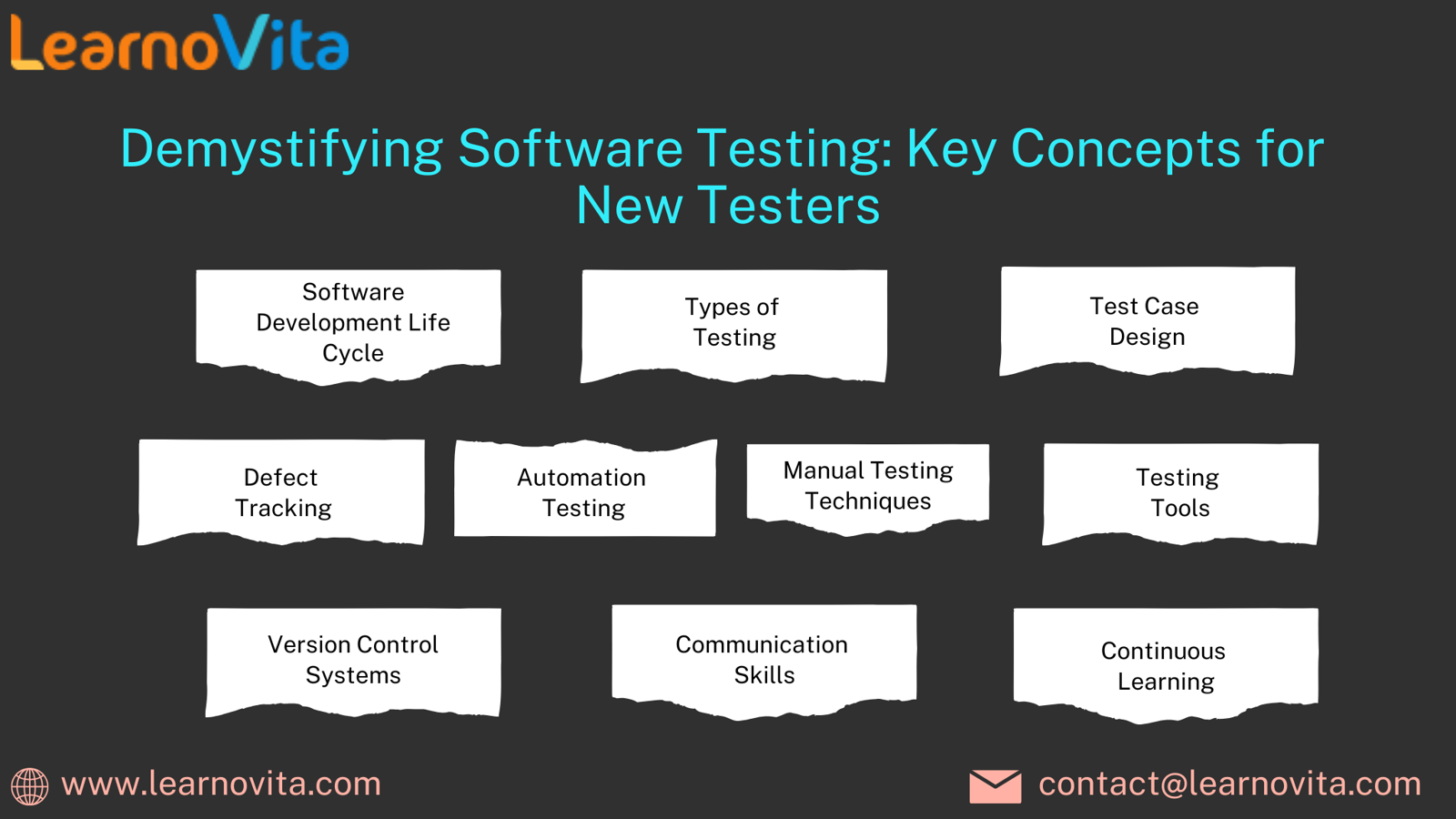
6. Enhancing Manual Testing Skills
Refine your manual testing expertise, especially in exploratory testing, where testers actively engage with the application to uncover unexpected defects.
7. Understanding Testing Tools
Knowledge of various testing tools is important. In addition to automation tools, consider exploring performance testing tools (e.g., JMeter) and security testing tools (e.g., OWASP ZAP).
8. Proficiency in Version Control
Become proficient in version control systems like Git. Effective management of code changes is essential for successful collaboration with development teams.
9. The Importance of Effective Communication
Strong communication skills are key in testing roles. Clearly articulating issues, collaborating with team members, and engaging with stakeholders are essential for success. Accurate defect reporting and comprehensive documentation contribute greatly to team effectiveness.
10. Commitment to Continuous Learning
In a constantly evolving tech landscape, dedicating yourself to ongoing learning through online courses, workshops, and certifications is vital. Staying informed about the latest tools and methodologies will ensure your skills remain relevant and sharp.
Conclusion
Launching a career in software testing can be incredibly rewarding. By mastering the essential concepts and skills outlined in this guide, new testers can make valuable contributions to their teams and help ensure the delivery of high-quality software applications. Remember, software testing is about more than just identifying bugs; it’s about delivering reliable and user-friendly solutions.